Food web

This is a diagram of a food web. Almost all animals must eat other organisms to obtain energy. Animals do not generally eat just one thing, nor are they eaten by only one thing. This means that each organism, through feeding, is interconnected to many different organisms. A food web shows how all species in a community are connected.

Let’s think about the organisms in an environment. If any one species is disturbed, then all species will undergo changes in its population. Eg. If small fish numbers go down then snail and cockle numbers will go up. Big fish and seabird numbers will go down.

An animal can be both a predator and a prey. For example, a small fish may eat certain types of snails, but he may also be eaten by a duck. So the small fish is both predator and prey in this food web..

Almost all animals must eat other organisms to obtain energy. Animals do not generally eat just one thing, nor are they eaten by only one thing. This means that each organism, through feeding, is interconnected to many different organisms. A food web shows how all species in a community are connected.

We, humans, often upset the balance of different populations in natural ecosystems, or change the environment so that some species find it difficult to survive. We reduce the amount of land available for animals and plants by: building; quarrying; farming; dumping waste.

Our activities may pollute: water ‐ with sewage, fertiliser or toxic chemicals; air ‐ with smoke and gases such as sulfur dioxide; land ‐ with toxic chemicals, such as pesticides and herbicides, which may be washed from land into water.

What’s for dinner?

Ecology is the study of organisms and their relationship with their surroundings. Ecologists study the interaction between an organism and its environment. Some ecologists study a specific species or habitat. They might study the behaviour of a single species to see how it interacts with other organisms and the environment. Or, an ecologist might study many different species that either depend on each other (a food web, for example), or compete with each other for food and space

Every organism needs to obtain energy in order to live. For example,plants get , energy from the sun, some animals eat plants, and some animals eat other animals.

food chain is the sequence of who eats whom in a biological community (an ecosystem) to obtain nutrition.

  • The arrows indicate the direction of energy flow.
  • The food chain moves food from one organism to another, giving energy to the organism digesting the food.

Eg. Buttercup Bee Thrush Hawk. Plankton Herrings Salmon Seals Killer whales

  • All food chains start with the sun which provides energy for plants.
  • Photosynthesis by plants converts light energy to food. Plants are considered producers because they make their own food.
  • The producers above are grass, buttercup, rosebush and plankton.
  • Animals, including humans, cannot make their own food. As a result, they must get their energy from other sources, usually plants and other animals. Thus, animals are considered consumers.

As you can see in the diagram, food chain is the sequence of who eats whom in a biological community (an ecosystem) to obtain nutrition. Every organism needs to obtain energy in order to live. For example, plants get energy from the sun, some animals eat plants, and some animals eat other animals.

DNA란….!

Chromosome(염색체):  http://www.tiricosuave.com/images/chromosome.jpg

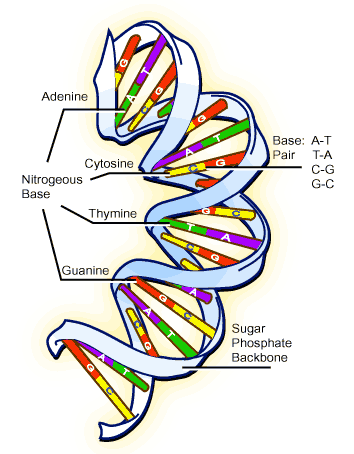
Structure of DNA: http://www.scq.ubc.ca/wp-content/dna.gif

모든 세포는 핵(nucleus)를 가지고 있는데 이 안에 들어있는것이 Chromosome이다. 앞서 설명했던 것과 같이 chromosome은 DNA로 이루어져있다. DNA는 두개의 긴 테이프가 사다리로 연경되어 나선형으로 돌고있는 형태를 취하고 있으며, 세포가 활성을 유지하기 위해 필요한 모든 정보를 지니고 있다.

만일, DNA에 구조상 결함이 있거나 DNA의 양이 충분하지 못할경우 세포의 기능은 물론 분열(Cell Division: Mitosis, Meiosis 참고)에 지장을 초래한다. 이 이유는, 세포가 분열할때 DNA는 본래의 DNA와 똑같은 두개의 DNA를 복제하는데, 이 복제가 무슨 이유에서든 일어날 수 없으면 그 세포는 두개의 세포로 나누어 질수 없거나 chromosome의 갯수(number)가 부족하게 된다.

Chromosome의 number가 달라질경우 이 세포는 죽음으로 이루게 되거나, 잘못된 세포로 임신을 하게되면 기형아기가 태어난다.

Deoxyribonucleic acid (DNA)

  • Nucleic acid (there are two nucleic acid found in living organisms, which is RNA and DNA)
  • Contains the genetic instructions used in the development and functioning of all known living organisms
  • Storage of information
  • DNA is like blueprints or a recipe, or a code,
  • It contains the instructions needed to construct other components of cells (eg. proteins)
  • DNA segments that carry this genetic information are called genes
  • Involved in regulating the use of this genetic information.

Cancer

불치의 병으로 여겨졌던 질병이었지만 이제 암의 완치율이 증가하고 있는 이유는 조기발결을 위한 검진, 수술의 개선, 방사선요법의 출현과 약물요법의 발달이라고 볼수있다. 암에 대해서 많이 들어보기도 했고 암환자들의 이야기도 방송에 자주 출연하지만 과학과목을 듣는 학생들 조차도 암이 어떤 질병이고 어떻게 발생하는지 잘 모르고 있다.

오늘은 ‘암'(Cancer) 에대해서 설명할텐데 전문용어가 많이 나오기때문에 한국어와 함께 영어를 써야할것 같다. :) 모르는 단어는 물어보시길…

인체의 구성단위는 세포(cell)이다. 인체의 성장은 세포의 분열(cell division)으로 이루어진다. 세포의 분열은 성인이 될때까지 지속되는데, 성인이 되더라도 모발(hair), 피부(skin), 위장관의 상피(villi), 생식기관(reproductive organ), 골수(bone marrow)등 신진대사(metabolism)가 활발한 기관에서는 여전히 왕성한 게포분열을 보인다.

각 장기(organ)를 이루고 있는 세포군(tissue)은 장기의 이익을 도모하려는 합목적적인 기능을 발휘하며, 필요이상의 세포분열은 정상적으로라면 제어되야한다.

미성숙한 세포(pre-mature)는 분열에 따라 자신이 소속된 장기의 특이한 고유기능을 가지게되면서 성숙(mature)해진다. 세포가 성숙해지는 시기가 오면 세포의 분열이 멈추게 된다. 예를들자면 자극전달의 기능을 가진 신경세포나 운동을 담당하는 근육세포는 영구히(permanently) 분열이 정지된다. 산소운반의 기능을가진 적혈구도 일단 골수(bone marrow)에서 성숙해지면 분열할수가 없다. 간세포의 경우는 조금 다른데, 정상시에는 분열하지 않다가 손상을 입게되면 (damage) 매우 왕성하게 분열한다.

암은 한개 또는 여러개의 비정상적인 세포로 부터 발생하며, 비 정상적인 세포분열을 제어하는 조정으로부터 벗어나 자동적으로 분열을 계속하는 특징을 가졌고 미성숙한 세포와 유사한 분열을 고수한다.

이때문에, 자신이 소속한 장기에서 이탈하여 다른 장기로 전이하고 정착하면서 상당한 크기로 분열하게 되면 장기전체를 파멸로 이끌게된다. 예를들면 장(intestine)에있는 세포가 허파(lung)으로 옮겨가 허파의 tissue사이에 장세포가 이전되 허파기관을 망가트려 놓는 것이다.

암을 쉽게 발견하지 못하는 이유는, 암중에는 분열 및 성장이 매우 더딘 종류가있어 수년내지 십수년간 전혀 증상을 초래하지 않는 경우도 있다. 그중에 하나가 전립선암(Prostate cancer)이다. 그러나 대부분 정상조직보다 분열이 빠르며, 이거슬 저지할수 있는 면역기전(Immune system)이나 방어기전(Defensive system) 이 무너지면 급속히 자라기 시작한다. 어떤암들은 두배로 성장하는 시간이 하루종도 밖에 안된다.

암의 중요한 특징을 몇가지 들수 있는데, 첫째로 정상조직보다 빨리 자라서 딱딱한 종괴로 발견되며, 둘째로 암조직과 정상조직과의 경계가 불분명하고, 세째로 원방부위에서 타부위로 전이되는 성향이 있다.

일반적으로는 성장속도가 느린 암일수록 크게 자라지 않는 한, 전이가 드물고, 성장속도가 빠른 암일수록 조기에 전이가 가능하다.

전이되는 대표적인 경로는 혈액을 통하여 간,폐,골(brain)등으로 가거나 임파관(Lymph vessels)를 통하여 임파선으로 갈수 있고, 인접 장기에 직접 침윤해 갈 수도 있다.