Cell organelle

동물성 세포의 각 기관들을 나타낸 그림이다.

Nucleus (핵)안에는 chromosome염색체를 가지고 있고 세포안의 모든 활동/화학작용(chemical reaction/metabolism) 에 대한 정보가 들어있다. 이 염색체는 부모로부터 유전된(inherited) 물질로써 세포가 분열(cell division)할때 완벽하게 복제(copy/duplicate/clone/replicate)된다.

단백질(Protein)을 합성하는 과정중 염색체의 gene을 베껴오는데, 이것을 RNA라고 한다. DNA와 RNA의 다른점중 한가지는 DNA는 핵안에만 있어야 하고, RNA는 이것을 cytoplasm으로 베껴나온 카피라고 할수있다. 도서관에서 빌려나오지 못하는 책을 복사하는 것과 같은것이다.  Gene만 복사했기때문에 DNA에 비해서는 월등히 짧으며 필요한 protein를 만드는데 사용할 정보만 들어있다.

베껴나온 RNA는 Endoplasmic Reticulum(ER)에 붙어있는 Ribosome (Rough E.R) 들이 해석해내어 protein의 초본을 만들고, 이것을 polypeptide라고 한다. 이 이유는, RNA를 해석한대로 amino acid(아미노산)이 순서대로 붙게되는데 3D의 입체적인 구조와 모양을 지니지 못했기때문에 그 기능을 다 할수없다. 그래서 polypeptide라고 하며, 만들어진 polypeptide는 Golgi Body로 보내저 입체적인 구조와 모양을 가지게 된다. Golgi Body(Apparatus)의 역활은 즉 packaging(포장)과 modification(변형)이다.

Ribosome이 붙어있지 않은 Smooth E.R 부분 에서는 세포막에 쓰여질 lipid, cholesterol 와 steroid를 만드는데 쓰인다.

Mitochondrion에서는 세포의 기관들이 일을할때 쓰이는 energy (ATP)를 만드는 역활을 가지고 있다.

Peroxisome 안에는 lysosome이 들어있고, 주변에 membrane으로 둘러싸여져 있다.  Membrane 으로 묶어둔 이유는 lysosome이 enzyme이기 때문이다. 세포안에 들어온 균(bacteria, virus, antigen 등)을 녹이거나 늙어서 없어져야할 세포기관을 녺이는 데 쓰인다. – 세포가 자폭할때 쓰이기도 함.

DNA and Gene Expression

Function of chromosomes

When a cell is not dividing, its chromosomes become very long and thin. Along the length of chromosome is a series of chemical structures called genes. The chemical which forms the genes is called DNA. Each gene controls some part of the chemistry of the cell. It is these genes which provide the instructions. One gene may instruct the cell to make the pigment which is formed in the iris of brown eyes. On one chromosome there will be a gene which causes the cells of the stomach to make the enzyme pepsin. When the chromatids separate at mitosis, each cell will receive a full set of genes. In this way, the chemical instructions in the zygote are passed on to all cells of the body. All the chromosomes, all the instructions are faithfully reproduced by mitosis and passed on complete to all the cells.

………………………………………………….

‘Chromosome’과 ‘DNA’의 의미를 제대로 알고 사용해야한다. Chromosome이란 세포의 핵안에 있는 유전물질(genetic material)을 말한다. DNA는 Deoxyribonucleic Acid의 약자인데… 이것을 생각해보면 분명 화학적 의미를 가지고 있다는걸 알게된다. DNA는 즉, chromosome을 이루고 있는 molecule의 집합이고, nucleic acid/nucleotide 로 이루어져 있다.

(NCEA시험이든 CIE시험이든 이 두단어를 제대로 구분하지 못하고 쓰지 못하면 점수를 획득할수 없다!)

………………………………………………….

Genes

Chromosomes consist of a protein framework, with a long DNA molecule coiled round the framework in a complicated way. Its the DNA part of the chromosome which controls the inherited characters and it is sections of the DNA molecule which constitute the genes. The gene which causes brown eyes will have no effect in a stomach cell and the gene for making pepsin will not function in the cells of the eye.

………………………………………………….

(다시 DNA로 돌아와서..!)

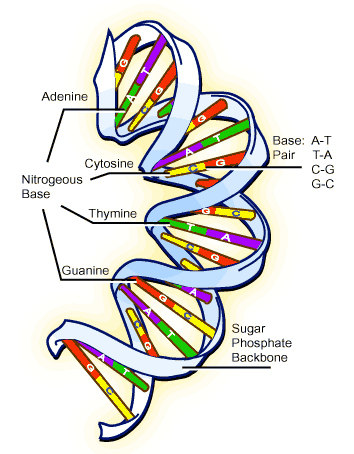
DNA molecule is a long chain of nucleotides.  A nucleotide is a 5 carbon sugar molecule joined to a phosphate group and an organic base.

In DNA, the sugar is Deoxyribose and the organic base is either

  • A = adenine
  • T = thymine
  • C = cytosine
  • G = Guanine

The sequence of bases forms a code which instructs the cell to make particular proteins. Proteins are made from amino acids linked together. The type and sequence of the amino acids joined together will determine the kind of protein formed. It is the sequence of bases in the DNA molecule which decides which amino acids are used and in which order they are joined. Each group of three bases stands for one amino acid.

A gene, then, is a sequence of triplets of the four bases, which specifies an entire protein. Most proteins contain a thousand or more bases.

The chemical reaction which take place in a cell determine what sort of a cell it is and what its functions are. These chemical reactions are controlled by enzymes. Enzymes are proteins. Therefore the genetic code of DNA, in determining which proteins, particularly enzymes are produced in a cell, and determines the structure and function of the enzymes.

………………………………………………….

Replication of DNA

(기억할것! Replication은 Mitosis 과정중 일어난다.)

The DNA in a chromosome consists of 2 chains of nucleotides held together by chemical bonds between the bases. The size of the molecule ensures that adenine always pairs with thymine and cytosine pairs with guanine. The double strand is twisted to form a helix.

Before cell division can occur, the DNA of the chromosome has to replicate – to make identical copy of it-self. To do this, enzymes make the double strands of DNA unwind and separate into two single strands rather like undoing a zip.

Nucleotides are brought to the unzipped DNA and joined to the exposed bases with the aid of enzymes. The adenine of an arriving nucleotide always joins to the thymine of the DNA, and cytosine to the guanine.

The new nucleotides join up to form a chain attached to the exposed strand. This happens all the way along each DNA strand. Since this is happening in both strands of DNA strand, the double helix is replicated and the full set of genetic instructions is passed to both daughter cells at cell division.

………………………………………………….

수많은 궁굼증을 해소해야만 이해할수 있는 Gene expression! 공부하면 할수록 어려운 부분이긴 하지만 결코 넘지 못할 산은 아니다. :)

DNA란….!

Chromosome(염색체):  http://www.tiricosuave.com/images/chromosome.jpg

Structure of DNA: http://www.scq.ubc.ca/wp-content/dna.gif

모든 세포는 핵(nucleus)를 가지고 있는데 이 안에 들어있는것이 Chromosome이다. 앞서 설명했던 것과 같이 chromosome은 DNA로 이루어져있다. DNA는 두개의 긴 테이프가 사다리로 연경되어 나선형으로 돌고있는 형태를 취하고 있으며, 세포가 활성을 유지하기 위해 필요한 모든 정보를 지니고 있다.

만일, DNA에 구조상 결함이 있거나 DNA의 양이 충분하지 못할경우 세포의 기능은 물론 분열(Cell Division: Mitosis, Meiosis 참고)에 지장을 초래한다. 이 이유는, 세포가 분열할때 DNA는 본래의 DNA와 똑같은 두개의 DNA를 복제하는데, 이 복제가 무슨 이유에서든 일어날 수 없으면 그 세포는 두개의 세포로 나누어 질수 없거나 chromosome의 갯수(number)가 부족하게 된다.

Chromosome의 number가 달라질경우 이 세포는 죽음으로 이루게 되거나, 잘못된 세포로 임신을 하게되면 기형아기가 태어난다.

Deoxyribonucleic acid (DNA)

  • Nucleic acid (there are two nucleic acid found in living organisms, which is RNA and DNA)
  • Contains the genetic instructions used in the development and functioning of all known living organisms
  • Storage of information
  • DNA is like blueprints or a recipe, or a code,
  • It contains the instructions needed to construct other components of cells (eg. proteins)
  • DNA segments that carry this genetic information are called genes
  • Involved in regulating the use of this genetic information.

Reaction and Enzyme

  • Cells are able to build up and break down their proteins, lipids and carbohydrates or change one to the other.
  • Eg. Animals cells build up glycogen from glucose.
  • all cells can make proteins from amino acids and they can build up fats from glycerol and fatty acids.
  • Animals cannot make proteins unless they are supplied with amino acids.
  • Plants can make their own amino acids starting from sugar and salts.

………………………………………………………………………………….

Lock and key model

http://www.scienceclarified.com/images/uesc_05_img0235.jpg

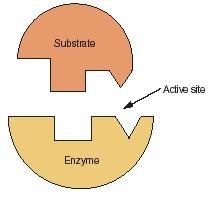
세포안에서는 수많은 물질들이 합쳐졌다가도 분해되기도 한다. 이런 chemical reactions의 속도를 맞추어주는것이 enzyme의 기능이다. Enzyme이 작용하기 위해서는 알맞는 온도와 pH가 맞아야만 하고, active site(접착기면)에 substrate(기질)이 정확이 맞아야만 한다.

Substrate가 자기만의 모양을 가지고 있듯이 화학 반응이 일어나는 표면인 active site또한 자신만의 모양을 가지고있다. 퍼즐과 퍼즐이 맞아떨어저야 그림을 이루듯, 이 두가지가 정확이 맞아떨어질때 반응이 일어나는것이다.

………………………………………………………………………………….

Enzymes are proteins that act as biological catalysts.

  • made in the cells
  • catalyst is a chemical substance that speeds up a reaction but does not get used up during the reaction.
  • anabolic enzyme reaction = join two other molecules together and form a more complicated substance. Large molecules are built up from smaller molecules.
  • Catabolic enzyme reaction = split large molecules into smaller ones.

Enzymes을 공부할땐 5가지를 꼭 기억해서 외우자.

1. Enzymes and temperature:

A rise in temperature increases the rate of most chemical reactions. A fall in temperature slows down. However, if the temperature is too high for the enzyme (eg. above 50’C) protein can be denatured and stop working. The shape of an enzyme molecule is very important if it has to fit the substances on which it acts.

2. Enzymes and pH:

Acid and alkaline conditions alter the chemical properties of enzyme. Most enzymes work best at particular level of acidity or akalinity (pH).

3. Enzymes are specific for substrates:

Enzyme that normally acts on one substance will not act on a different one.

4. Rates of enzyme reaction:

  • depends on the temperature and pH
  • concentration of the enzyme and its substrate

5. Intra- and extracellular enzymes: All enzymes are made inside cells. Most of them remain inside the cell to speed up reactions in the cytoplasm and nucleus.

DNA Replication Process Steps (1)

DNA Replication process steps:

1.Unwinding the DNA molecule

2.Making new DNA strand

3.Two new double-helix DNA molecule

*In cell division, two DNA strands appear as sister chromatids joined at a centromere.

Make sure you understand Semi Conservative model: Two daughter strands of DNA will each have one old strand from the parent DNA and one newly formed strand.